THE NUCLEUS
Client : POM Oost-Vlaanderen, Universiteit Gent, PMV and Sogent
Architects : EVR-architecten - VK architects+engineers
Location : Zwijnaarde
Year of completion : 2026
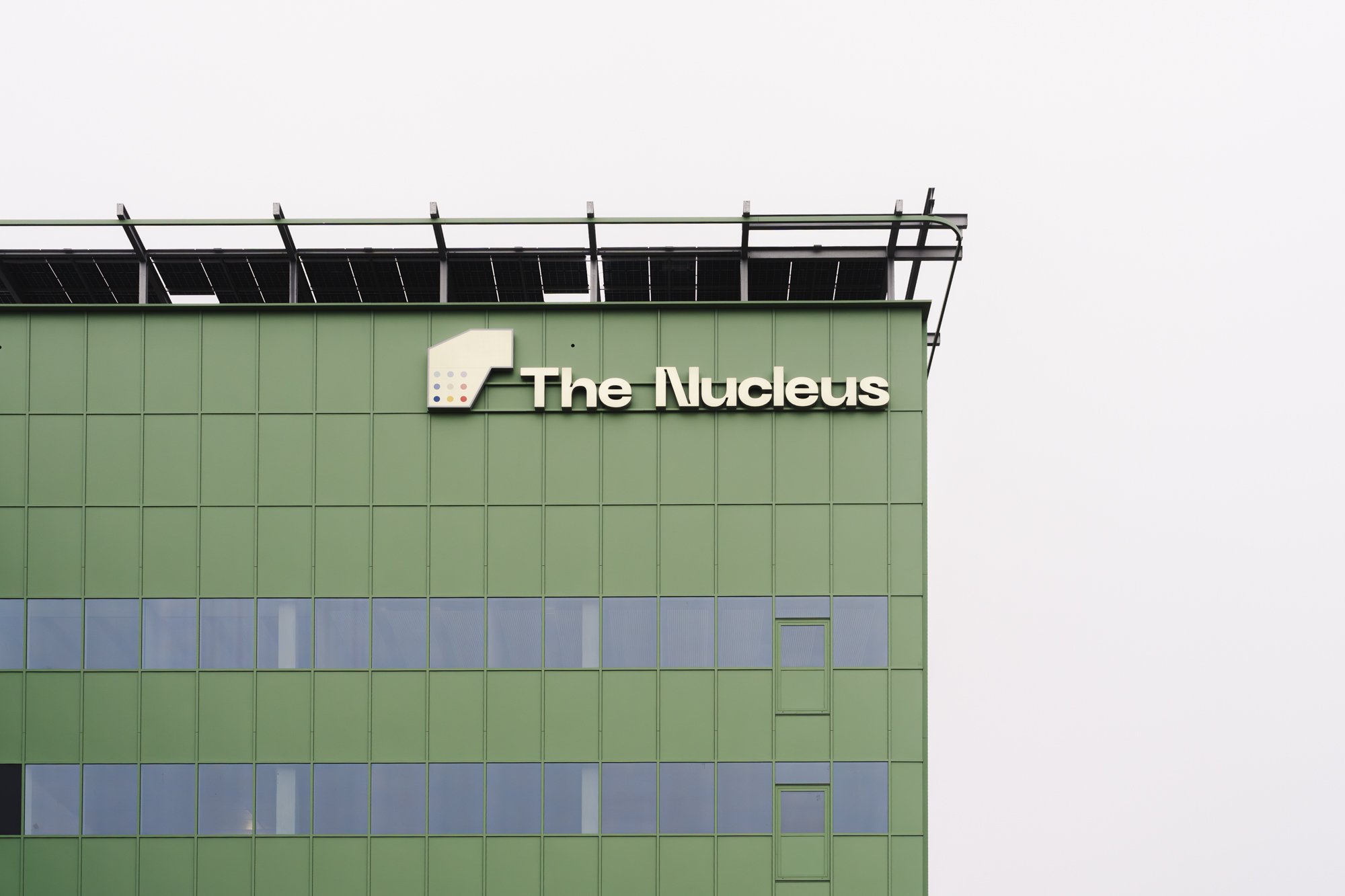
Situated at Tech Lane Ghent Science Park (Campus Eiland Zwijnaarde), The Nucleus is a future-oriented business and meeting hub of approximately 13,000 m². The project, developed by an SPV of POM East Flanders, Ghent University, PMV and Sogent, combines flexibility and adaptive construction within a BREEAM ‘Very Good’ ambition.
For the realisation of the partitions, Beddeleem was involved from the very beginning. Circularity was not treated as an add-on, but as a structural component of the construction process, a crucial success factor.
70% REuse in JB 2000 Partitions
The following products were installed in The Nucleus:
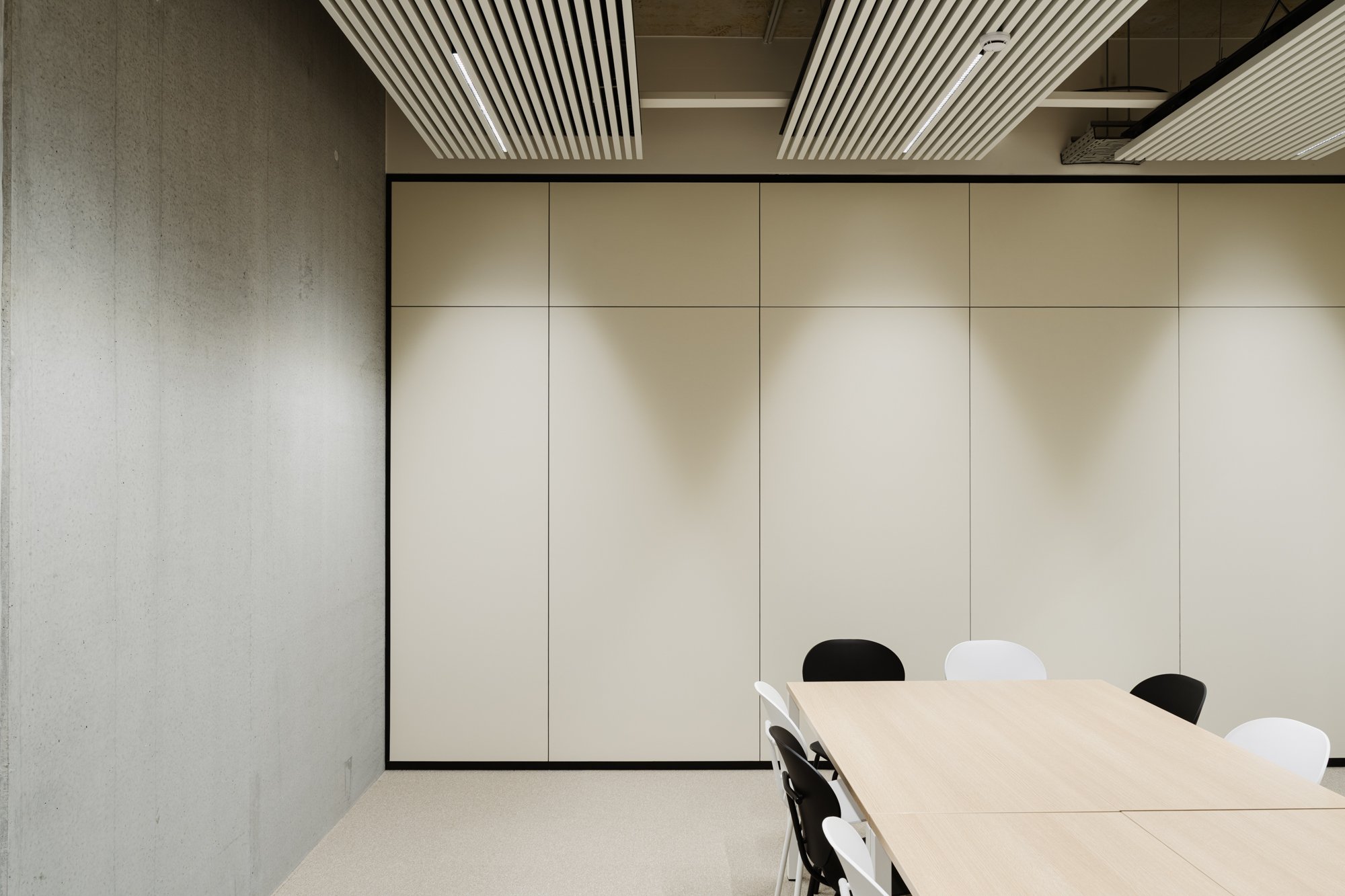
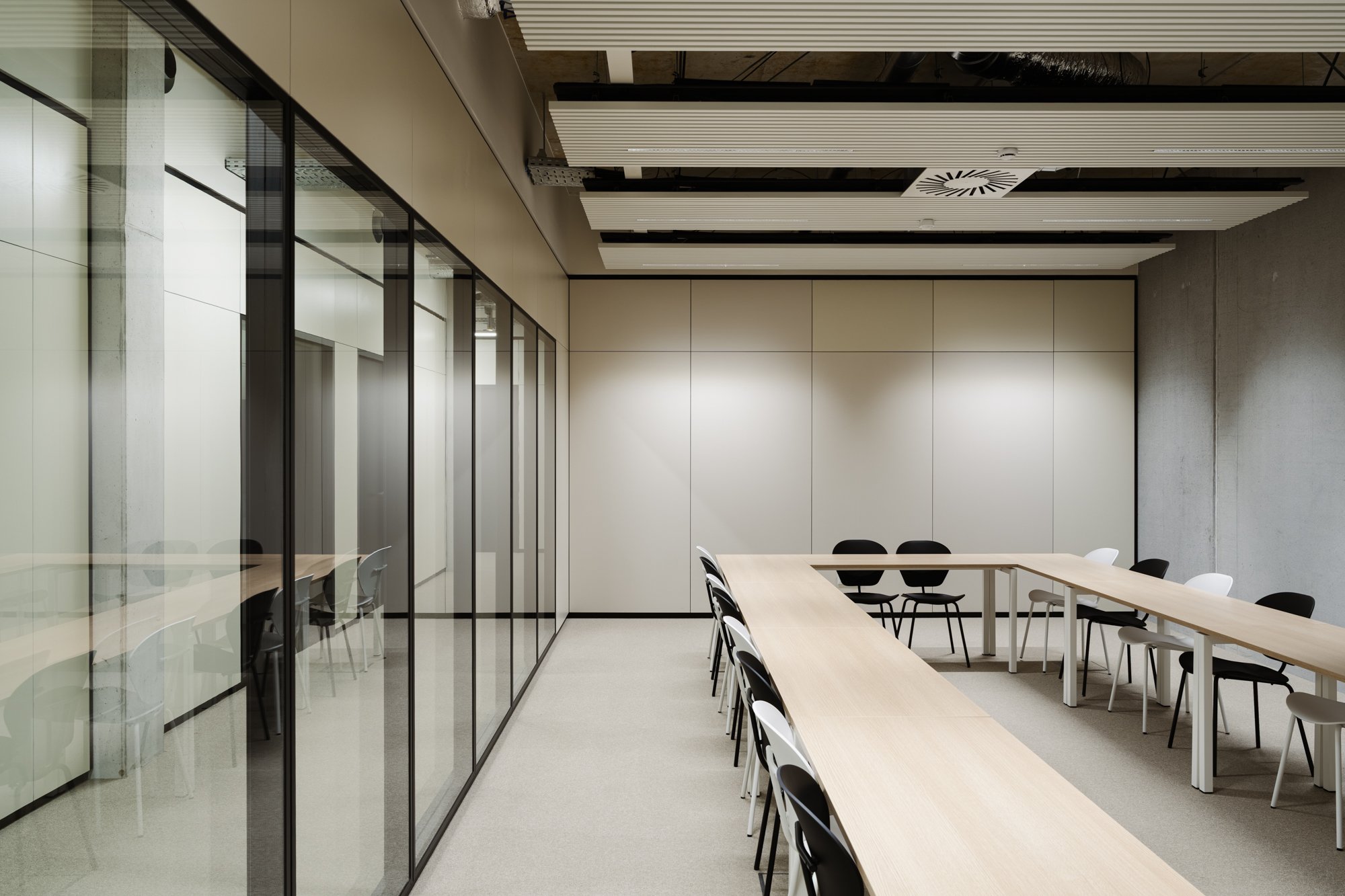
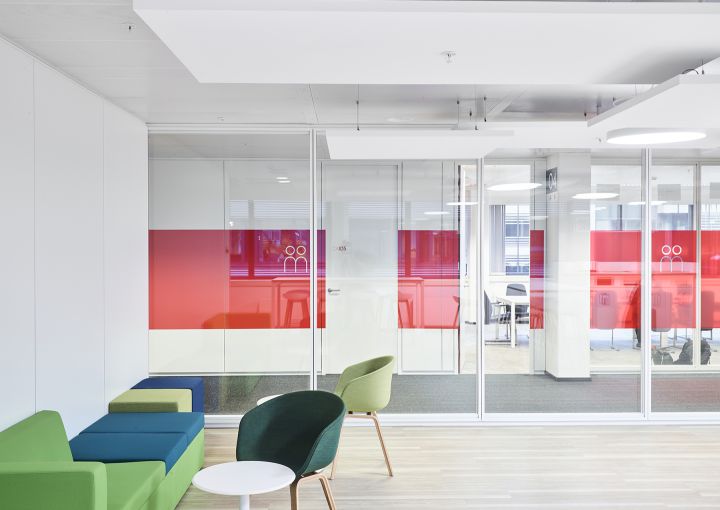
- 1,100 m² of JB 2000 FULL relocatable partitions - REuse range (Beddeleem Circular)
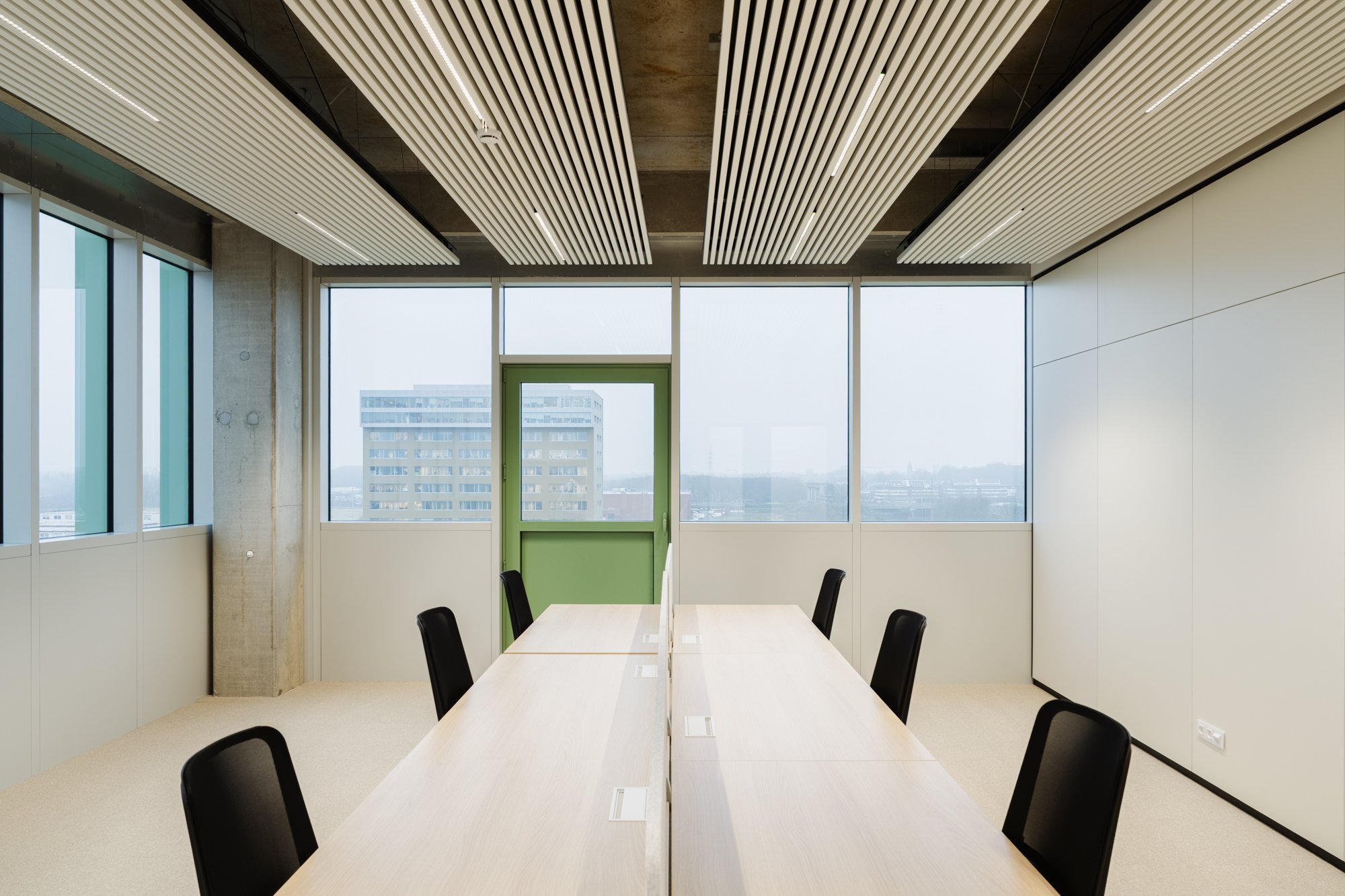
- 100 m² of JB 2000 FRAME relocatable partitions
- Approx. 900 m² of raised flooring from reclaimed materials
Within the installed partitions, nearly 70% consists of reused components.
Not only solid panels were reused, but also glass modules and a large share of the insulation. Even the raised floor on the first level was built using reclaimed floor tiles (via main contractor Algemene Bouw Maes).
The doors were newly produced due to specific passage standards required for laboratory environments, but were designed modularly with future reuse in mind.
From Previous Projects to a New Life
The reclaimed partitions previously served in four other projects, including the Brussels-based Waterside project, where an office building was transformed into a school.
After dismantling, the elements were carefully inspected and technically adapted at our production site in Nazareth-De Pinte (Belgium). Even glass modules, insulation materials and floor tiles were given a second life.
Designing for Reuse
Sustainable construction starts at the design stage. The building concept by EVR-architecten (in collaboration with VK architects+engineers and Exilab) is based on a flexible 7.2 x 7.2 metre grid and a demountable, layered structure.
For the partitions, stacked modules of approximately 2.30 m in height were selected. The standard width of 1.20 m was adjusted to 1.07 m in order to optimally integrate the available reclaimed materials.
By maintaining the lower module at a consistent height throughout the building, elements remain interchangeable between different floors and zones, a smart strategy to ensure long-term flexibility.
Measurable Environmental Impact
The circular approach results in demonstrable ecological gains:
- 57% reduction in environmental impact through the reuse of wooden panels and insulation (standard solid wall)
- 88% reduction in environmental impact through the reuse of glass partition modules
These figures clearly demonstrate that circular partition systems make a substantial contribution to overall building performance.
Logistics, Collaboration and Timing as Key Factors
Circular construction requires more than a technical system. Materials originating from different sites had to be inventoried, dismantled, transported and reassembled into a new configuration.
During the process, acoustic requirements were further refined. Thanks to the modularity of JB 2000 , certain partitions could still be upgraded with adapted acoustic insulation where needed.
The early involvement of all partners like client, design team, contractor and subcontractors made it possible to reconcile circular ambitions with budget and planning.
Circular Construction as a Structural Choice
The Nucleus demonstrates that large-scale reuse can perfectly align with high technical requirements and a forward-looking vision.
For architects and construction professionals, the message is clear: when circularity is structurally embedded in design and coordination, buildings are created that are not only high-performing today, but fully prepared for their next life cycle.
- Projects
- THE NUCLEUS